
Archive
TechEd New Zealand : my sessions
This year I have just about 2 sessions at TechEd New Zealand.
DCIM315 – Implementing Enterprise-Scale Disaster Recovery with Azure Site Recovery, Network Virtualization, and Microsoft System Center 2012 R2
In this session we cover different aspects of Hyper-V Recovery Manager, an enterprise-scale Disaster Recovery solution to provide a single click failover in case of disaster (e.g., automation of overall DR workflow using with sequencing, manual actions, etc. to provide both application and site level DR). Learn how to enable Azure as a Disaster Recovery point in a secure manner and seamless management of failover, failback type activities using Azure IaaS VM. Network connection—back to datacenter and to the clients—is one of the top challenges in setup of your DR infrastructure and we cover how to simplify networking for disaster recovery setup. The session also covers enhancements to the solution for the private datacenter to the private datacenter scenario.
PCIT313 – Azure RemoteApp
Bring scale, agility and global access to your business applications. Azure RemoteApp helps employees stay productive anywhere, and on a variety of devices – Windows, Mac OS X, iOS, or Android. Integrate Azure RemoteApp with your company’s existing on-premise infrastructure and bring your own Remote Desktop Session Host, or deploy Azure RemoteApp using our pre-built app collections for a stand-alone cloud service. Quickly ramp up and provide seasonal workers, vendors, or large groups of new employees access to company applications without paying for new servers and expensive on-premise infrastructure.
NEW book: System Center 2012 R2 Virtual Machine Manager #SysCtr #MVPBuzz #HyperV
That’s on. After months of writing and reviews, my new book System Center 2012 R2 Virtual Machine Manager is now released.
Covering : Windows 2012R2 aand Hyper-V new features, System Center 2012 R2 VMM, Operations Manager, App Controller and Azure integration as well Veeam Management Pack.
- Plan and design a VMM architecture for real-world deployment
- Configure network virtualization, gateway integration, storage integration, resource throttling, and availability options
- Integrate Operations Manager (SCOM) with VMM to monitor your infrastructure
- Integrate SC APP Controller (SCAC) with VMM to manage private and public clouds (Azure)
- Deploy clusters with VMM Bare Metal
- Create and deploy virtual machines from templates
- Deploy a highly available VMM Management server
- Manage Hyper-V, VMware, and Citrix from VMM
- Upgrade from previous VMM versions
Order now at http://bit.ly/1pZ5VoQ
Create, deploy, and manage datacenters and private and hybrid clouds with hybrid hypervisors using VMM 2012 R2. Integrate and manage fabric (compute, storages, gateways, and networking), services and resources, and deploy clusters from bare metal servers. Explore VMM 2012 R2 features such as Windows 2012 R2 and SQL 2012 support, converged networks, network virtualization, live migration, Linux VMs, and resource throttling and availability
#Azure Roadshow: Cloud Challenges, Opportunities and Migration Strategies
Summary
Cloud opportunities and offerings that will benefit organisations, as well as the challenges and Migration Strategies to help overcome these.
Topics covered:
- Microsoft Azure PaaS and IaaS offerings:
◦Application Lift & Shift Scenarios
◦Cloud-born Applications that Leverage Office 365 & Yammer
◦Cloud Identity - Cloud-enabled Mobile Device Management with Windows InTune
- Hybrid Cloud deployment model involving Hyper-V and System Center
◦Network Integration - Migration strategies to Public Cloud
◦Driving SaaS Adoption
Target Audience:
Decision Makers, CTO’s, CIO’s, IT Managers, Dev Managers
Time, Date, Venue and Registrations:
Registrations open at 8.30am. A light breakfast will be provided. Presentations will commence at 9am sharp and finish at 11am.
- Sydney :29 August 2014 – Sydney, NSW – REGISTER HERE
- Melbourne : 31 Jul 2014 – Microsoft | Level 5, 4 Freshwater Place, Southbank, Melbourne – REGISTER HERE
- Brisbane : 05 August 2014 – Cliftons | Brisbane – REGISTER HERE
- Perth : 19 August 2014 – Microsoft | Level 3, 100 St Georges Terrace, Perth – REGISTER HERE
For more Information about the events, see http://readify.net/events/
About READIFY : http://readify.net/about-us/
About the Presenters
Alessandro Cardoso | Readify National Manager – Platform Solutions
Alessandro Cardoso is a passionate technology evangelist and a subject matter expert in cloud, virtualization and management. He recently published his book; ‘Microsoft System Center Virtual Machine Manager 2012 Cookbook’ http://wp.me/p15Fu3-mK, and has reviewed 5 other books. Alessandro is a speaker at key technical events in Australia and New Zealand and has been a Microsoft Most Valuable Professional since 2009 leading major Cloud, Virtualization, UC&C, AD and Exchange projects for large customers in APJ.
Mitch Denny | Readify Platform Technology Specialist
Mitch Denny has been working with the .NET platform since the year 2000 when the first alpha releases shipped. Since then he has been awarded MVP status nine times in ASP.NET and more recently Microsoft ALM. Currently Mitch is working as Readify’s Platform Technology Specialist – focusing on bringing exciting new products and services to market and working with technical specialists to continually refine our technical vision.
Extend your Datacenter: Integrate your on premises Hyper-V with Azure with no public Internet traffic using ExpressRoute
Microsoft announced the general availability of the Azure ExpressRoute service.
ExpressRoute allows you to connect your existing datacenters to Azure without having to flow any traffic over the public Internet, and enable–guaranteed network quality-of-service and the ability to use Azure as a natural extension of an existing private network or datacenter.
It can also be a cost-effective option for transferring large amounts of data such as datasets for high performance computing applications or moving large VMs between your dev/test environment in Azure and on-premises production environment
Microsoft is also offering enterprise SLA for the service, as well as a variety of bandwidth tiers.
Several provider partnerships with ExpressRoute are in place, including: AT&T, Equinix, Verizon, BT, Level3, TelecityGroup, SingTel and, Zadara.
Here you can find pricing details about the service: http://azure.microsoft.com/en-us/pricing/details/expressroute/
ExpressRoute will allow you to build applications that span on-premises infrastructure and Azure without compromising security or performance. For example, you can have your corporate front end intranet application running in Azure (SharePoint for example) and the back end using an on-premises SQL Server, serving all corporate users without traffic ever routing through the public Internet. This can also be used to guarantee, if you have data sovereignty policies that your data will always stays in the country.
You can get more information on the ExpressRoute website.
MVP Comm Camp : System Center 2012R2 Operations Manager slide decks
Hi
For those who were able to attend the MVP Community Camp last Saturday, a big thank you attending and for the positive feedbacks.
Great to hear that more and more you are utilizing System Center.
System Center 2012R2 Operations Manager – Comprehensive monitoring of physical, virtual, and cloud infrastructure. Operations Manager offers key capabilities, monitoring diverse environments, assuring physical, virtual, and cloud infrastructure health, ensuring reliable workload configurations

Through this discussion, we hope you see how System Center uniquely delivering on the key areas :
As promised, here is the slide deck for Monitoring with Operations Manager – Overview
Monitoring Hyper-V and VMware workloads. Integrating SCVMM with SCOM. Veeam MP
The System Center 2012 VMM cookbook has a Chapter 10 (as a plus for the readers), which is not on the paperback/Kindle version. It is mentioned in the “What This Book Covers” section of the book and if you brought the book you will be able to download the chapter for free.
Chapter 10, Integration with System Center Operations Manager 2012 SP1, provides tips and techniques to allow administrators to integrate SCOM 2012 with SCVMM when monitoring the private cloud infrastructure.
In a hybrid hypervisor environment (for example, Hyper-V, VMware), using Operations Manager management packs (MPs) (for example, Veeam MP), you can monitor the Hyper-V hosts and the VMware hosts, which allow you to use only the System Center Console to manage and monitor the hybrid hypervisor environment
What we cover in chapter 10 :
- In this chapter, we will cover:
- Installing System Center Operations Manager 2012 SP1
- Installing management packs
- Managing Discovery and Agents
- Configuring the integration between Operations Manager 2012 and VMM 2012
- Enabling reporting in VMM
- Monitoring VMware vSphere infrastructure from the Operations Manager using management packs
With management packs, you can extend Operations Manager (OpsMgr) and its possibilities. On a hybrid hypervisor environment, where there is a mix of Hyper-V and VMware ESXi servers, the Veeam MP extends the OpsMgr for monitoring, alerting, and for undertaking remedial actions on VMware vSphere. Veeam MP uses vSphere API to gather information to allow monitoring and reporting against all layers of the VMware stack, which include layers from the underlying hardware though network, storage, hosts, clusters, datacenters, up to vCenter. Examples of the key metrics for the VMware admins include latency, CPU ready, disk and memory pressure against a host.
For the Chapter 10, Veeam Management Pack for VMware (SCOM) s required. There is a new version 6.5 which can download from here: http://www.veeam.com/vmware-microsoft-esx-monitoring-resources.html
Enjoy reading !
To buy the book
http://www.packtpub.com/microsoft-system-center-virtual-machine-manager-2012-cookbook/book
Hyper-V is the #1 Hypervisor in Latin America
Hyper-V is ranked number one in Latin America for x86 virtualization. The graphic below shows the adoption since 2008. Looking at that, I can see that it will grow more and more, as Windows 2012/R2 roll out increases.
Best-in-class features, performance, flexibility, simplified IT administration and cloud ready OS, allied with costs saving , I am sure are the drivers behind this adoption. Plus when you add System Center, you can take advantage of unified compute resources, data storage and networking administration which span physical, virtual and cloud environments.
Microsoft has closed the gap with its closest competitor : VMware. The adoption of IT virtualization infrastructure is an example of how Latin America is one of the emerging markets that will shape what IDC calls the “Third IT Platform.”

According to IDC, in 2014 emerging markets will see almost 100% more smart connected devices shipped than in developed markets. They will also see their cloud computing spending increase seven-fold, and, in terms of Big Data, they will account for more than 40% of the ‘digital universe’ in 2014.
My Microsoft Teched Australia 2013 speaking sessions
This year I will be presenting 4 ILL sessions at TechEd Australia, but you can also find me at the Microsoft Showcase : Datacenter and at the Insight booth in the Exhibition Centre.
Take time to visit Insight booth and learn about what we can do to help your business and to enter on a draw to win a Microsoft Surface or a signed copy of my book: System Center 2012 VMM.
My Sessions:
| AZR-I201
Wednesday 11:15 – 12:45 |
Getting to Know Windows Azure IaaS, Part 1
Whether you build apps or support the infrastructure that runs the apps, the cloud can be a really big place. For some, it’s a natural evolution for their application and infrastructure to embrace the power and scale of the cloud. For others, it’s a journey that has to begin with a single step. Windows Azure provides that first step with a scalable, flexible platform for deploying your applications your way. With our Infrastructure as a Service platform (IaaS) called Windows Azure Virtual Machines, you get the flexibility to choose between Windows and Linux with full control over the operating system configuration and installed software, matched with the portability of Hyper-V disk images. Windows Azure Virtual Machines provide the perfect environment for meeting all of your Infrastructure-as-a-Service needs. To learn more about our Infrastructure as a Service platform, we invite all developers and IT professionals to join Matt Hester as he introduces you to the Microsoft Cloud Platform, dives deep into Windows Azure Virtual Machines, and helps walk you through a hands-on demonstration of the power of IaaS on the Windows Azure platform. This is part 1 of 2. Please plan on attending both WAD-IL201 and WAD-IL202 to complete the lab. The lab requires you to connect to the Windows Azure Portal, where you will provision three separate virtual machines in the cloud and configure them each via a Remote Desktop client connection. All participants need to have access for Windows Azure prior to the lab. You can register for a FREE 90-day trial of the Windows Azure prior to the lab. You can sign up for your FREE trial here: http://aka.ms/IaasBootCamp. |
| AZR-I202
Wednesday |
Getting to Know Windows Azure IaaS, Part 2
Whether you build apps or support the infrastructure that runs the apps, the cloud can be a really big place. For some, it’s a natural evolution for their application and infrastructure to embrace the power and scale of the cloud. For others, it’s a journey that has to begin with a single step. Windows Azure provides that first step with a scalable, flexible platform for deploying your applications your way. With our Infrastructure as a Service platform (IaaS) called Windows Azure Virtual Machines, you get the flexibility to choose between Windows and Linux with full control over the operating system configuration and installed software, matched with the portability of Hyper-V disk images. Windows Azure Virtual Machines provide the perfect environment for meeting all of your Infrastructure-as-a-Service needs. To learn more about our Infrastructure as a Service platform, we invite all developers and IT professionals to join Matt Hester as he introduces you to the Microsoft Cloud Platform, dives deep into Windows Azure Virtual Machines, and helps walk you through a hands-on demonstration of the power of IaaS on the Windows Azure platform. This is part 2 of 2. In order to attend this session you need to attend WAD-IL201 first. The lab requires you to connect to the Windows Azure Portal, where you will provision three separate virtual machines in the cloud and configure them each via a Remote Desktop client connection. All participants need to have access for Windows Azure prior to the lab. You can register for a FREE 90-day trial of the Windows Azure prior to the lab. You can sign up for your FREE trial here: http://aka.ms/IaasBootCamp. |
| MDC-I315
Friday |
Microsoft System Center 2012 – Orchestrator: Overview and Automation of IT Process
This lab guides you through several process automation examples, providing hands-on experience with the concepts explained in the course manual and provides real-world context. In this exercise, you are introduced to the interfaces available with Orchestrator. Create a Runbook to perform actions such as working with File Management Objects, monitor a folder for the accumulation of more than 5 log files, move the files to an archive folder and log an event for each file archive operation, using the Runbook Tester Console to Validate Runbooks. This lab also covers the creation of a Runbook to perform the actions, such as automate recovery of a Windows Service based on alert detection from a unit monitor in System Center Operations Manager to address the intermittent Windows service failures. It also highlights advanced concepts and techniques that can be employed when creating runbooks in Orchestrator. |
| MDC-I321
Thursday |
Microsoft System Center 2012: Network Virtualization
This lab provides a step-by-step description for how to build, configure and implement Hyper-V Network Virtualization using Windows Server 2012 and System Center 2012 SP1. You create a multi-tenant virtual network on shared physical network including multiple subnets and virtual routes using the NVGRE configuration. |
Microsoft announced date for Windows 8.1 RTM
Microsoft announced that Windows 8.1 will be available to consumers and businesses worldwide on October 18, 2013. At 12:00am on October 18th in New Zealand(4:00am October 17th in Redmond)
I’m excited to announce that, on the same day, eligible customers will be able to download Windows Server 2012 R2 and System Center 2012 R2, as well as the latest update to Windows Intune! .
Keep learning about the 2012 R2 releases via our “What’s New in 2012 R2” series, and also download the preview bits if you haven’t already done it.
Windows 8.1 and Windows RT 8.1 will begin rolling out worldwide as a free update for consumers with Windows 8 or Windows RT devices through the Windows Store. Windows 8.1 will also be available at retail and on new devices starting on October 18th by market. So mark your calendars!
More info:
Networking enhancements in the Windows 2012 R2 based on customer feedbacks
With Server 2012 and VMM 2012 SP1, Microsoft enabled new foundational scenarios from Continuous Availability (with in-box NIC Teaming) to building blocks for Software Defined Networking (with the extensible Hyper-V Virtual Switch and Hyper-V Network Virtualization [HNV]) to IP Address Management (IPAM).
Now with Server and VMM 2012R2, Microsoft is targeting the reduction of networking Capital Expenditures (CapEx), by enabling customers to maximize utilization of their existing resources and reduce the need for specialized hardware over time.
Microsoft got the feedback from customers advising that they want choice and flexibility in both the networking vendors they use and the cloud in which their workloads run. They need the ability to plug and play between vendors without having to change management software, processes, or knowledge, plus the ability to deploy any workloads across any cloud provider.
The other feedback received by Microsoft is that network automation is key. Automation is required across the Service Provider’s network, the tenant’s network, and network infrastructure services (load balancing, firewall, etc.).
As you can see in the figure below, the feedback is giving notably results to the customers with many features that further enhance Microsoft end-to-end capabilities:

Recommended articles:
Recommended Books


System Center 2012 R2 Virtual Machine
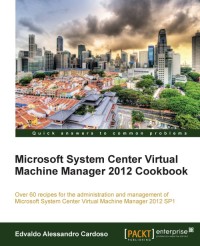
System Center Virtual Machine Manager 2012 Cookbook


 Cloudtidings.com