
Archive
Oracle running on Azure
Yes, your heard right
Oracle virtual machines on Windows Azure are now in preview, Multi-Factor Authentication is generally available and we have an announcement regarding SQL Database.
Microsoft and Oracle provide end-to-end support for customers running business-critical Oracle software on Windows Azure
Oracle, Oracle WebLogic Server, and the Java development environment are now available, in preview, in the Windows Azure Virtual Machines Image Gallery. These images include licenses for the Oracle software that they contain.
During the preview period, there is no charge for the included Oracle licenses. You will pay only for the Windows Azure compute and storage resources that your Virtual Machine consumes. If you would prefer to use an Oracle software license that you already own, you can do that too. Just choose a Windows Server image from the Image Gallery and install the Oracle software yourself.
Whether you bring your own Oracle license or use one of the license-included images, you now have increased flexibility and choice in where to deploy your applications and the peace of mind that comes from knowing you will be fully supported by Oracle.
To get started, sign in to the Windows Azure Management Portal and add a new Virtual Machine from the Image Gallery.
For more information, visit the Oracle information page on the Windows Azure website.
Transform the Datacenter Immersion workshop event in Melbourne and Sydney
Attend The Modern Datacentre: Envision & Evolve workshop. This is a TDI workshop: Transform the Datacenter Immersion.
The workshop will inspire you to take further steps towards private/hybrid cloud architecture and operating model for their data centres. The attendees will learn about strategies to cut costs and enable innovation across four solution areas:
· Service Delivery and Automation
· Infrastructure Management and Optimisation
· Modern Work styles
Technologies covered : Windows 2012R2 Hyper-V, System Center 2012 R2 VMM, System Center 2012 R2 Operations Manager, Windows Azure.
Register at http://au.insight.com/events/experience-the-cloud-optimised-datacenter/
WHERE & WHEN |
|
SydneyThursday 26th September 2013 8:30 am to 10:30 am @ Microsoft – Ground Floor Level 1, 1 Epping Road Freshwater Place North Ryde NSW 2113 |
MelbourneWednesday 25th September 2013 8:30 am to 10:30 am @ Microsoft – Exhibition Room Level 5, 4 Freshwater Place Southbank VIC 3006 |
My Microsoft Teched Australia 2013 speaking sessions
This year I will be presenting 4 ILL sessions at TechEd Australia, but you can also find me at the Microsoft Showcase : Datacenter and at the Insight booth in the Exhibition Centre.
Take time to visit Insight booth and learn about what we can do to help your business and to enter on a draw to win a Microsoft Surface or a signed copy of my book: System Center 2012 VMM.
My Sessions:
| AZR-I201
Wednesday 11:15 – 12:45 |
Getting to Know Windows Azure IaaS, Part 1
Whether you build apps or support the infrastructure that runs the apps, the cloud can be a really big place. For some, it’s a natural evolution for their application and infrastructure to embrace the power and scale of the cloud. For others, it’s a journey that has to begin with a single step. Windows Azure provides that first step with a scalable, flexible platform for deploying your applications your way. With our Infrastructure as a Service platform (IaaS) called Windows Azure Virtual Machines, you get the flexibility to choose between Windows and Linux with full control over the operating system configuration and installed software, matched with the portability of Hyper-V disk images. Windows Azure Virtual Machines provide the perfect environment for meeting all of your Infrastructure-as-a-Service needs. To learn more about our Infrastructure as a Service platform, we invite all developers and IT professionals to join Matt Hester as he introduces you to the Microsoft Cloud Platform, dives deep into Windows Azure Virtual Machines, and helps walk you through a hands-on demonstration of the power of IaaS on the Windows Azure platform. This is part 1 of 2. Please plan on attending both WAD-IL201 and WAD-IL202 to complete the lab. The lab requires you to connect to the Windows Azure Portal, where you will provision three separate virtual machines in the cloud and configure them each via a Remote Desktop client connection. All participants need to have access for Windows Azure prior to the lab. You can register for a FREE 90-day trial of the Windows Azure prior to the lab. You can sign up for your FREE trial here: http://aka.ms/IaasBootCamp. |
| AZR-I202
Wednesday |
Getting to Know Windows Azure IaaS, Part 2
Whether you build apps or support the infrastructure that runs the apps, the cloud can be a really big place. For some, it’s a natural evolution for their application and infrastructure to embrace the power and scale of the cloud. For others, it’s a journey that has to begin with a single step. Windows Azure provides that first step with a scalable, flexible platform for deploying your applications your way. With our Infrastructure as a Service platform (IaaS) called Windows Azure Virtual Machines, you get the flexibility to choose between Windows and Linux with full control over the operating system configuration and installed software, matched with the portability of Hyper-V disk images. Windows Azure Virtual Machines provide the perfect environment for meeting all of your Infrastructure-as-a-Service needs. To learn more about our Infrastructure as a Service platform, we invite all developers and IT professionals to join Matt Hester as he introduces you to the Microsoft Cloud Platform, dives deep into Windows Azure Virtual Machines, and helps walk you through a hands-on demonstration of the power of IaaS on the Windows Azure platform. This is part 2 of 2. In order to attend this session you need to attend WAD-IL201 first. The lab requires you to connect to the Windows Azure Portal, where you will provision three separate virtual machines in the cloud and configure them each via a Remote Desktop client connection. All participants need to have access for Windows Azure prior to the lab. You can register for a FREE 90-day trial of the Windows Azure prior to the lab. You can sign up for your FREE trial here: http://aka.ms/IaasBootCamp. |
| MDC-I315
Friday |
Microsoft System Center 2012 – Orchestrator: Overview and Automation of IT Process
This lab guides you through several process automation examples, providing hands-on experience with the concepts explained in the course manual and provides real-world context. In this exercise, you are introduced to the interfaces available with Orchestrator. Create a Runbook to perform actions such as working with File Management Objects, monitor a folder for the accumulation of more than 5 log files, move the files to an archive folder and log an event for each file archive operation, using the Runbook Tester Console to Validate Runbooks. This lab also covers the creation of a Runbook to perform the actions, such as automate recovery of a Windows Service based on alert detection from a unit monitor in System Center Operations Manager to address the intermittent Windows service failures. It also highlights advanced concepts and techniques that can be employed when creating runbooks in Orchestrator. |
| MDC-I321
Thursday |
Microsoft System Center 2012: Network Virtualization
This lab provides a step-by-step description for how to build, configure and implement Hyper-V Network Virtualization using Windows Server 2012 and System Center 2012 SP1. You create a multi-tenant virtual network on shared physical network including multiple subnets and virtual routes using the NVGRE configuration. |
What’s New in 2012 R2: Why is it so important for IT Pros to understand how modern applications are built
A great post by Microsoft Brad Anderson covering :
- Windows Azure Pack and it ability to build an application once and then deploy and operate it in any Microsoft Cloud – private, hosted or public.
- Windows Azure Service Bus, integrated experience as a part of the Windows Azure Pack, with the goal of bringing a self-service tenant experience that is consistent with the one that currently exists in Windows Azure.
- and lots of scenarios:
- Scenario 1: Application Messaging Patterns with Service Bus
- Scenario 2: Manage Messaging Entities Across Clouds
- Scenario 3: Hosting Alternatives with Service Bus
To read the blog series, follow http://blogs.technet.com/b/in_the_cloud/archive/2013/08/21/what-s-new-in-2012-r2-enabling-modern-apps-with-the-windows-azure-pack.aspx
Next Steps
- Service Bus 1.1 for Windows Server
Learn more about Service Bus features, components, and functionality in this deep technical overview on MSDN.
- Service Bus homepage
Check out the video tutorials, downloads, and other info on the Windows Azure site.
- AMQP 1.0 Support in Windows Azure Service Bus
Additional information on how to build a cross-platform, hybrid application using an open standard protocol.
- Service Bus Forums
rad’s
Bring Windows Azure to your datacenter
How about having the Windows Azure experience locally on your datacentre?
Microsoft is now enabling Hosting Service Providers to use Windows Server 2012 and System Center 2012 to deliver the same great experiences already found in Windows Azure.
The first two of these finished services are high density website hosting and virtual machine provisioning and management. Hosting Service Providers enable these modules through the new Service Management API and optional portal.
Create high scale WebSites – Out of the box automation lowers customer onboarding costs while metering and throttling of resources can help tailor customer offerings. Supports many frameworks including ASP.NET, Classic ASP, PHP and Node.js with full Git integration for Source Code Control. Download and install the Web Sites service on machines dedicated for the Web Sites roles.
Create Virtual Machines – Leverage the power of System Center and Windows Server to easily create an Infrastructure as a Service solution for customers to provision and manage VMs. Download the System Center 2012 SP1 and install and configure SPF per the deployment guide.
Administer WebSites – Administer Web Sites and Virtual Machine services on Windows Server while also offering customers the same Windows 8-style self-service user experience as found on Windows Azure to provision and manage their Web Sites and Virtual Machines. Download the Service Management Portal and Service Management API Express bits to install the Admin and Tenant portals, and the Service Management API on one machine.Download the WebPI and click on the Products tab. Select Windows Azure to deploy the portals and the Service Management API on separate machines.
More Info:http://www.microsoft.com/hosting/en/us/services.aspx
SCOM 2007 R2 : Monitoring Pack for Windows Azure
The Windows Azure Monitoring Management Pack enables you to monitor the availability and performance of applications that are running on Windows Azure.
After configuration, the Windows Azure Monitoring Management Pack offers the following functionality:
- Discovers Windows Azure applications.
- Provides status of each role instance.
- Collects and monitors performance information.
- Collects and monitors Windows events.
- Collects and monitors the .NET Framework trace messages from each role
instance. - Grooms performance, event, and the .NET Framework trace data from Windows
Azure storage account. - Changes the number of role instances via a task
System Center Monitor version : System Center Operations Manager 2007 R2 CU3 or newer
More detalis : http://www.microsoft.com/download/en/details.aspx?displaylang=en&id=11324
Recommended Books


System Center 2012 R2 Virtual Machine
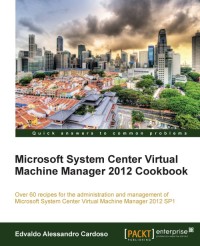
System Center Virtual Machine Manager 2012 Cookbook


 Cloudtidings.com