
Archive
Windows 8 : Why should my hardware have SR-IOV capabality ?
Single Root I/O Virtualization (SR-IOV)
SR-IOV capability will significantly reduce the overhead on network IO operations.
It allows for a virtual machine to have near native IO against the physical NIC, allowing applications that require very low latency to work inside of virtual machines.
What does it require?
- It must bypass teaming
- Interrupt and DMA remapping
- Access Control Services (ACS) on PCIe root ports
- Alternative Routing ID Interpretation (ARI)
- Hardware virtualization, EPT or NPT
Where to create:
– In the Hyper-V Manager, click on Virtual Switch Manager on the right panel
– Click Add New Virtual Switch
– Type the name of the virtual switch
– Tick box for Enable Single Root I/O virtualization (SR-IOV)

IMPORTANT :

More about SR-IOV here : SR-IOV feature (Single Root – I/O Virtualization)
Microsoft SR-IOV Support on Dell PowerEdge Servers (source : http://en.community.dell.com/techcenter/os-applications/w/wiki/3459.dell-supported-platforms-for-windows-server-8-sr-iov-feature.aspx):
Dell PowerEdge 12th Generation servers support the SR-IOV servers but previous generations have exceptions.
Below is a list of Dell 11th Generation platforms that support the SR-IOV feature:
- R910
The following platforms are also supported and must be an 11G Generation II server:
- T410, R410, R510, R610, T610, R710, T710.
How to identify an 11G Generation II system:
- These servers will be physically marked with symbol “II” on the Express service tag. The Express service tag is located in front panel of the system.
- These systems support Intel 56XX (Westmere) processors
- The System Revision Field in the iDRAC GUI will have “II”
Supported SR-IOV network cards:
- Intel X520 10GB Ethernet adapters.
Because Windows Server 8 Beta is a pre-release product still in active development, Dell does not provide any support for this pre-release software and it is not recommended for use in a production environment.
Windows Server 2012/R2 and NIC teaming modes and how to
NIC teaming, the new feature of Windows 2012/R2, allows multiple network adapters on a computer to be placed into a team for the following purposes:
- Bandwidth aggregation
– Traffic failover to prevent connectivity loss in the event of a network component failure
Modes:
- Generic or static teaming (IEEE 802.3ad draft v1): This mode requires configuration on the switch and the computer to identify which links form the team. Because this is a statically configured solution, no additional protocol assists the switch and the computer to identify incorrectly plugged cables or other errors that could cause the team to fail. This mode is typically supported by server-class switches.
- Dynamic teaming (IEEE 802.1ax, LACP): IEEE 802.1ax uses the Link Aggregation Control Protocol (LACP) to dynamically identify links between the computer and a specific switch. This enables the automatic creation of a team and, in theory, the expansion and reduction of a team simply by the transmission or receipt of LACP from the peer network adapter. Typical server-class switches support IEEE 802.1ax, but most switches require manual administration to enable LACP on the port.
- Switch independent: do not require that the team members connect to different switches, they merely make it possible.
Characteristics:
- It is manageable through both PowerShell and the GUI
- Supported on various NIC types/vendors
- You can team up to 32 NICs
- Unlimited virtual interfaces
- Multiple teaming modes
- NIC teams can only be formed between homogenous NICs. So two 1GB NICs can be teamed, or two 10GB NICs can be teamed, but you cannot team a 1GB and 10GB NIC.
- If the individual NIC support Receive Side Scaling (RSS), the NIC team also supports RSS. Hence it is a good idea to team NICs that support RSS. The resulting NIC team is also highly capable and does not lose any functionality.
- If the individual NIC supports RDMA, the resulting NIC team does NOT support RDMA. Given how Windows 8 SMB 2.2 natively supports RDMA without modifying applications, it is a bad idea to team NICs with RDMA capabilities, and where the interconnect (routers, etc) also supports RDMA
How to:
Using Powershell:
- Static
New-NetLbfoTeam -Name “Team-Static” -TeamMembers NIC1,NIC2 -TeamingMode Static
- Dynamic
New-NetLbfoTeam -Name “Team-Static” -TeamMembers NIC1,NIC2 -TeamingMode Lacp
- Switch Independent
New-NetLbfoTeam -Name “Team-Independent” -TeamMembers NIC1,NIC2 –TeamingMode SwitchIndependent
More Power Shell Commands:
- To get the Teaming proprieties and settings in PowerShell:
Get-NetLbfoTeam
- To get all of the PowerShell commands available for NetLBFO
Get-Command -Module NetLbfo
Using GUI:
- Open Server Manager.
- In the console tree, click Local Server.
- In the details pane, in the Properties section, click NIC Teaming Administration under Remote Desktop.

- In the NIC Teaming Window, select the NIC’s to team on the bottom right on the screen
- Right click and select add to new team

- In the new team window, provide the name of the nic team(e.g. team-static)
- Expand the additional properties and select the team mode

- click OK to finalise and create the nic team.


Now you are ready to create the Hyper-v Network Switch by using the NIC team.
Understanding SR-IOV in Hyper-V
John Howard, Senior Program Manager in the Hyper-V team at Microsoft, have been talking about the use of SR-IOV in Hyper-V in Windows Server “8”. You can start reading about it here:
Windows 2008R2 – Hyper-V / Cluster. Post SP1 patches
Here is the list of required and optional post Windows 2008R2 SP1 hotfixes.
Please keep in mind that it all depends on which hardware and software combinations are used:
Note: Windows Server 2008 R2 SP1 should be installed at a minimum plus the required hotfixes.
1 Windows & Hyper-V : Required Hotfixes
Validate SCSI Device Vital Product Data (VPD) test fails after you install Windows Server 2008 R2 SP1
http://support.microsoft.com/kb/2531907(required for 3+ node Hyper-V clusters)
The network connection of a running Hyper-V virtual machine may be lost under heavy outgoing network traffic on a computer that is running Windows Server 2008 R2 SP1
http://support.microsoft.com/kb/2263829
The Cluster service stops unexpectedly on a Windows Server 2008 R2 failover cluster node when you perform multiple backup operations in parallel on a cluster shared volume
http://support.microsoft.com/kb/2494162(required for Veeam backup software)
MPIO failover fails on a computer that is running Windows Server 2008 R2
http://support.microsoft.com/kb/2460971
The MPIO driver fails over all paths incorrectly when a transient single failure occurs in Windows Server 2008 or in Windows Server 2008 R2
http://support.microsoft.com/kb/2522766
Performance decreases in Windows Server 2008 R2 when the Hyper-V role is installed on a computer that uses Intel Westmere or Sandy Bridge processors
http://support.microsoft.com/kb/2517329 (for example : Intel Xeon 5600 series processors )
Stop error 0x0000007a occurs on a virtual machine that is running on a Windows Server 2008 R2-based failover cluster with a cluster shared volume, and the state of the CSV is switched to redirected access.
http://support.microsoft.com/kb/2494016 (required for Veeam backup software)
Optional Hotfixes
An update is available for Hyper-V Best Practices Analyzer for Windows Server 2008 R2
http://support.microsoft.com/kb/2485986
“0x0000009E” Stop error when you add an extra storage disk to a failover cluster in Windows Server 2008 R2
http://support.microsoft.com/kb/2520235
A virtual machine online backup fails in Windows Server 2008 R2 when the SAN policy is set to “Offline All”
http://support.microsoft.com/kb/2521348
Cluster node cannot rejoin the cluster after the node is restarted or removed from the cluster in Windows Server 2008 R2
http://support.microsoft.com/kb/2549472
Cluster service stops when an error occurs in the registry replication process of a failover cluster in Windows Server 2008 R2 or in Windows Server 2008
http://support.microsoft.com/kb/2496034
“0x20001” Stop error when you start a Linux VM in Windows Server 2008 R2 SP1
http://support.microsoft.com/kb/2550569
A heap memory leak occurs when an application or service queries the MSCluster_Resource WMI class in Windows Server 2008 R2
http://support.microsoft.com/kb/2580360
Cluster service initiates a failover after a delay of about 80 seconds when you shutdown the active node in Windows Server 2008 R2
http://support.microsoft.com/kb/2575625/en-us?sd=rss&spid=14134
New registration entries are added to the Persistent Reservation table when the physical disk resource that is associated with the CSV is taken offline on a Windows Server 2008 R2-based Failover Cluster
http://support.microsoft.com/kb/2579052/en-us?sd=rss&spid=14134
A transient communication failure causes a Windows Server 2008 R2 failover cluster to stop working
http://support.microsoft.com/kb/2550886
Cluster service leaks memory when the service handles state change notifications in Windows Server 2008 R2 or Windows Server 2008
http://support.microsoft.com/kb/2550894
Hyper-V Export function consumes all available memory in Windows Server 2008 or in Windows Server 2008 R2
http://support.microsoft.com/kb/2547551
Microcode update for Intel processors in Windows 7 or in Windows Server 2008 R2
http://support.microsoft.com/kb/2493989
Corrupted VSS snapshot
http://support.microsoft.com/hotfix/KBHotfix.aspx?kbnum=975688&kbln=en-us
FIX: The guest operating system may crash (STOP 0xd) when you perform a live migration of Hyper-V virtual machines in a Windows Server 2008 R2 environment
http://support.microsoft.com/kb/2636573
————-
A BIG Thanks to Hans Vredevoort
Windows 8 Hyper-V : Powershell script to create vm’s based on csv file
This is my first PowerShell 3.0 script to create Virtual Machine based on .csv file which contains the necessary information.
I created this script when in the Hands on Hyper-V PowerShell session at the MVP Global Summit, in Redmond.
Save the following .csv file ( I saved it on c:\vms )
OperatingSystem,MinimumMemoryMB,RecommendMemoryMB,BaseVhdPath Win7,512,1024,c:\VHD\7601.17514.101119-1850_x86fre_Enterprise_en-us_VL.vhd 2008R2,1024,2048,c:\VHD\WS2008R2_Enterprise_x64.vhd
——————————
Here is the Powershell script:
$vms={}
$vms=import-csv C:\vms\OperatingSystems.csv
foreach ($vm in $vms) {
#this command creates the VM with the recommend memory
New-VM -Name $vm.operatingsystem -MemoryStartupBytes $vm.RecommendedMemoryMB
# this command set’s the minimum memory for the OS
Set-Vm -Name $vm.operatingsystem -MemoryMinimumBytes $vm.MinimumMemoryMB
#how cool is the new command to extract the path and join to a new string…
$vhpath= join-path (Split-Path $vm.basevhdpath -Parent) -ChildPath ($vm.operatingsystem+’Diff.vhdx’)
#this command create a new differencing disk and attach it to a vm
New-VHD –ParentPath $vm.BaseVhdPath –Path $vhdpath -Differencing Add-VMHardDiskDrive -VMName $vm.operatingsystem -Path c:\vhd\Diff.vhdx
}
Client Hyper-V in Windows 8
Windows PowerShell scripts for managing virtual machines that you create using Client Hyper-V are fully compatible in with Windows Server 8 Hyper-V.
There a few features included in Windows Server 8 Hyper-V that are not included in Client Hyper-V. These include: the remote FX capability to virtualize GPUs (software GPU in RDP 8), Live VM migration, Hyper-V Replica, SR-IOV networking, and synthetic fiber channel.
HARDWARE : Hyper-V requires a 64-bit system that has Second Level Address Translation (SLAT). GB RAM is required. The RAM on your Client Hyper-V machine is allocated and de-allocated dynamically as required by the VMs. You can run several VMs on a Client Hyper-V machine (also called a “host”) that has the minimum 4GB of RAM, but you will need additional RAM for 5 or more VMs, depending on the RAM requirements for each VM.
Client Hyper-V supports server Hyper-V’s “Live Storage Move” capability. This means you can use your VMs fairly independent of the underlying storage. You can move VMs to and from one local drive to another, to a USB stick, or to a remote file share without needing to stop the VM.
To Enable using GUI:
-
On the Control Panel click “Programs”, and then click “Programs and Features”
-
Click “Turn Windows features on or off”
-
Click “Hyper-V”, and then click “OK”, and then click “Close”
Enable-WindowsOptionalFeature –FeatureName Microsoft-Hyper-V -Restart
Important :
You must restart your machine, not just reboot, to complete installation
For more info: Windows 8 Client Hyper-V wiki page (FWLINK) (http://social.technet.microsoft.com/wiki/contents/articles/7704.client-hyper-v-survival-guide.aspx)
Comprehensive list of Hyper-V updates ( 2008, 2008R2 and 2008R2SP1 versions )
Quick note: the recommended for all Hyper-V configurations vs. recommended if you meet the scenario documented in the KB.
- Recommended updates for all configurations: Required column = Yes
- Recommended update if you meet the scenario: Required column = Yes, ONLY install if the issue applies to you.
Comprehensive list of Hyper-V updates : Applies To: Windows Server 2008
http://technet.microsoft.com/en-us/library/dd430893(WS.10).aspx
Comprehensive list of Hyper-VR2 updates : Applies To: Windows Server 2008R2
List of Hyper-V Packages Updated After the Release of Windows Server 2008 R2 Service Pack 1 (SP1) :
NOTE: For Windows Server 2008 R2 Hyper-V systems with SP1 installed, there are two recommended updates for all configurations:
-
KB2263829 – Hyper-V networking issue that multiple customers hit; This fix is also published on WU.
-
KB2525835 – Security Update
Are you ready for the Microsoft Private Cloud?
On February 21 & 22 Microsoft is running a 2-day virtual training event to help the world learn about the upcoming enhancements with the Creating & Managing a Private Cloud with System Center 2012 Jump Start.
It is 100% free and open to the public, so register now!
Sign up today at: http://mctreadiness.com/MicrosoftCareerConferenceRegistration.aspx?pid=298
Event Overview
Adopting this exciting new computing paradigm provides a whole new landscape of technology and career direction for IT professionals. Microsoft Learning and the Microsoft System Center 2012 team have partnered to bring you an exciting opportunity to learn what you need to know to deploy, manage and maintain Microsoft’s private cloud solution. Leveraging the popular Jump Start virtual classroom approach, the industry’s most gifted cloud experts will show attendees why this new private cloud solution, based on System Center 2012 and Windows Server, has garnered so much attention. Presenters include Symon Perriman, Sean Christensen, Adam Hall, Kenon Owens, Prabu Rambadran & Chris Van Wesep and there will be a live Q&A during the event.
Event Agenda
Day 1: Deployment & Configuration (Feb. 21)
· Part 1: Understanding the Microsoft Private Cloud
· Part 2: Deploying the Infrastructure Components
· Part 3: Deploying the Private Cloud Infrastructure
· Part 4: Deploying the Service Layer
· Part 5: Deploying the Applications & VMs
Day 2: Management & Operations (Feb. 22)
· Part 6: Managing the Infrastructure Components
· Part 7: Managing the Private Cloud Infrastructure
· Part 8: Managing the Service Layer
· Part 9: Managing the Applications & VMs
Sign up today at: http://mctreadiness.com/MicrosoftCareerConferenceRegistration.aspx?pid=298
Jump Start Overview
This accelerated Jump Start sponsored by Microsoft Learning is tailored for IT professionals familiar with Windows Server technologies, Hyper-V virtualization, and the System Center management solutions. The course is designed to provide a fast-paced and technical understanding of how and why Microsoft’s approach to the private cloud delivers scalability, security, flexibility and control. Here are few unique benefits of this course:
· Students have the opportunity to learn from and interact with the industry’s best cloud technologists!
· This high-energy, demo-rich learning experience will help IT Professionals understand why Microsoft private cloud solutions are making a splash in the industry.
· Students will see with their own eyes how Windows Server 2008 R2 and System Center 2012 work together to provide the best combination of security and scale.
· Information-packed agenda! Day one of this two-day online course will focus on designing and deploying the right solutions for your organization, while day two will provide an in-depth look at the tools available to help monitor, secure and control the operational aspects of a private cloud.
Sign up today at: http://mctreadiness.com/MicrosoftCareerConferenceRegistration.aspx?pid=298
Hyper-V. New Linux Integration Services 3.2
This release includes the following features:
-
Synthetic Mouse Support: Finnaly ! The virtualized mouse device is no longer bound to the VMConnect window, and can now be used with a RDP session, which means that you no longer need to install a separate package to get integrated mouse support, and will not have to worry about the mouse being captured by the virtual machine.
-
Merged Device Drivers: We now present a single device driver for both IDE and SCSI devices (hv_storvsc).
-
Windows 8 Fix: The synthetic network device (hv_netvsc) can now be used with a Windows 8 host, eliminating the hang on boot that was previously seen.
-
SCVMM Fix: This release fixes the issue as described inKB2586286.
-
Improved Setup Experience: Users now only need to run install.sh (as root) to automatically detect the correct architecture and install the appropriate drivers
In addition, :
- The driver applied to guest virtual machines running Red Hat Enterprise Linux Server 6.1 (architecture x 86 and x 64) and CentOS 6.0 (architecture x 86 and x 64). For earlier version should be used components integration version 2.1
- In fact, it’s modified drivers in the Linux kernel 3.2, but can work with the Linux kernel 2.6.32, shipped with Red Hat and CentOS
BIG NOTE: Microsoft is working with the sponsors of the Linux distros and in the future a list of officially supported distributions will be expanded.
You can download them directly from here: http://www.microsoft.com/download/en/details.aspx?id=28188
TechNet Live! Meetings: Private Cloud Focused
All the details are below along with how you can register for these events. look forward to seeing many of you there!
Title: Delivering the Private Cloud with Microsoft Technologies
Date: Friday. 28th of October 2011 11:00am – 12:15PM (AEDT)
Speaker – Jeff Alexander
Registration: Click Here
Event Overview
Let’s face it. Everyone is talking about Cloud Computing and how it’s bringing a fundamental shift in the way that IT services are delivered. This is certainly true and there are many spins on what cloud is and how it can help your business. In this session, Jeff Alexander from Microsoft Australia will discuss what a “Private Cloud” is and how you can use it to deliver IT as a service. In fact you may already have many of the building blocks in place that make up a private cloud and not even realise. This session will cover the Microsoft technologies that deliver the private cloud as well as the components that make up the infrastructure.
Title: System Center Virtual Machine Manager 2012: What’s in it, and how it enables building the Private Cloud
Date: Friday, 11th of November 2011 11:00am – 12:15PM (AEDT)
Speaker – Jeff Alexander
Registration: Click Here
Event Overview
SCVMM 2012 is designed to deliver industry leading virtual machine management, deployment, and configuration for services in private cloud environments. It features deep investments in server application virtualization, service design, and service modelling all of which can be used to build an on-premises private cloud. This session will include an overview of key SCVMM 2012 key new features that include SCVMM Fabric Creation and Management, Network and Storage support, Private Cloud Creation and Delegation, and Service Creation. Attendees will gain an understanding of VMM 2012 supported scenarios, along with an understanding of how to use these capabilities to build an on-premise private cloud.
Title: Cloud Management with System Center App Controller 2012
Date: Friday, 25th of November 2011 11:00am – 12:15PM (AEDT)
Speaker – Jeff Alexander
Registration: Click Here
Event Overview
As organizations move to deploying services and applications in the cloud, it is important that they have a common management experience for deployment, visibility and control in a manner that is abstracted from the underlying cloud. This session provides an overview of System Center App Controller 2012 and how it enables self-service of both public and private cloud infrastructures.
Title: System Center Operations Manager 2012: Technical Overview
Date: Friday, 9th of December 2011 11:00am – 12:15PM (AEDT)
Speaker – Jeff Alexander
Registration: Click Here
Event Overview

The next release of Operations Manager will introduce many exciting new and enhanced features sets to help organizations efficiently and effectively monitor their environments across their compute, network, storage infrastructure, while assuring attainment of service levels across their applications. In this session we’ll discuss how Operations Manager 2012 helps to monitor your existing infrastructures as well as cloud resources to deliver infrastructure as a service.
I hope to see you at these events and look forward to sharing this information with you
Recommended Books


System Center 2012 R2 Virtual Machine
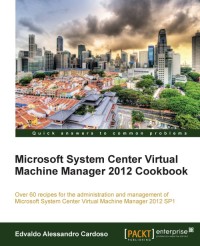
System Center Virtual Machine Manager 2012 Cookbook


 Cloudtidings.com