
Archive
Be Ready Windows Server 2008 R2 is coming ( Free Seminars ) : Updated
Would you like to know the new features of Server 2008 R2? Windows Server 2008 R2 extends the award winning features of Windows Server 2008, and now comes with new features to enable organizations to increase reliability and flexibility .
New virtualization tools, Web resources, management enhancements and exciting Windows 7 integration all help save time, reduce costs, and provide a platform for an efficient managed data center, including powerful tools such as Internet Information Services (IIS) version 7.5, updated Server Manager and Hyper-V platforms and Windows PowerShell version 2.0.
We will also talk about how Windows Server 2008 R2 works better together with Windows 7’s new features like branch caching, VPN etc, and Microsoft Exchange Server experts will talk about Exchange Server 2010 and how it integrates better with the new Active Directory control center in Server 2008 R2 . Also about Windows Hyper-V R2 : what’s new features comes with this award solution : Clustered Shared Volumes, Live Migration, Storage Migration(SCVMM R2) and more.
This seminar(s) is for people who like to learn about new technologies. All presentations will be delivered by Microsoft MVPs & MCTs who are experts in their field.
To attend these seminars is FREE but places are limited and all attendees have the chance to win copies of Windows Server 2008, WS08 R2 RC on dvd, and relevant MS Press books.
We are running 4 big events in Sydney, Melbourne , Brisbane & Perth and we will run 6 medium events in major cities for the ones who missed the big launch events. And of course we did not forget the other cities.More dates will be advised soon.
30/07/2009 Parramatta 32/181 Church St. Parramatta NSW 2150 (CEO Training)
Bookings :http://parraws08r2.eventbrite.com
12 /08 /2009 Sydney 1 Epping Rd. North Ryde NSW 2113 ( Microsoft Office)
Bookings : http://aufirestarter.eventbrite.com
19 /08 /2009 Canberra – Suite 1, Level 3, CCG House, The Boulevard, 219 London Circuit Canberra, ACT, 2601 (CEO TRAINING)
Bookings : http://server2008r2.eventbrite.com
26 /08 /2009 Melbourne – L3, 85 Queen St. Victoria ( Advanced Training)
Bookings : http://mel1firestarter.eventbrite.com
02/09 /2009 Canberra – Suite 1, Level 3, CCG House, The Boulevard, 219 London Circuit Canberra, ACT, 2601 (CEO TRAINING)
Bookings : http://windowsr2.eventbrite.com
16/09 2009 Adalaide TBA Bookings :
23/ 09 /2009 Brisbane – Ground Floor, 62 Astor Terrace, Spring Hill QLD 4000 ( ITTS)
Bookings : http://brisbanewindows.eventbrite.com
Speakers :
For more details please e-mail : eozkaya@ceotraining.com.au or alessandrocardoso@live.com
Hyper-v R2 : Processor Compatibility
With Hyper-V R2, Microsoft include a new Processor Compatibility feature. Processor compatibility allows you to move a virtual machine up and down multiple processor generations from the same vendor.

Here’s how it works:
When a Virtual Machine (VM) is started on a host, the hypervisor exposes the set of supported processor features available on the underlying hardware to the VM. This set of processor features are called guest visible processor features and are available to the VM until the VM is restarted.
When a VM is started with processor compatibility mode enabled, Hyper-V normalizes the processor feature set and only exposes guest visible processor features that are available on all Hyper-V enabled processors of the same processor architecture, i.e. AMD or Intel. This allows the VM to be migrated to any hardware platform of the same processor architecture. Processor features are "hidden" by the hypervisor by intercepting a VM’s CPUID instruction and clearing the returned bits corresponding to the hidden features.
Just so we’re clear: this still means AMD<->AMD and Intel<->Intel. It does not mean you can Live Migrate between different processor vendors AMD<->Intel or vice versa.
In addition, you may be aware that both AMD and Intel have provided similar capabilities in hardware, Extended Migration and Flex Migration respectively. Extended and Flex Migration are cool technologies available on relatively recent processors, but this is a case where providing the solution in software allows us to be more flexible and provide this capability to older systems too. Processor Compatibility also makes it easier to upgrade to the newest server hardware. In addition, Hyper-V Processor Compatibility can be done on a per VM basis (it’s a checkbox) and doesn’t require any BIOS changes.
Time To Get Uber-Geeky
Now that I’ve explained what processor compatibility mode does and the flexibility provides, I’m guessing there are a few propeller heads who want to go further and know exactly what a "normalized processor" means from a processor feature standpoint. Happy to oblige. When a VM in processor compatibility mode is started, the following processor features are hidden from the VM:
|
Host running AMD based processor |
Host running Intel based processor |
|
SSSE3, SSE4.1, SSE4.A, SSE5, POPCNT, LZCNT, Misaligned SSE, AMD 3DNow!, Extended AMD 3DNow! |
SSSE3, SSE4.1, SSE4.2, POPCNT, Misaligned SSE, XSAVE, AVX |
FAQ
Q: What happens if a vendor has written an application that uses one of these features that isn’t visible with processor compatibility enabled?
A: Since the feature isn’t exposed to the virtual machine, the application won’t "see it" and it’s up to the application to determine how to proceed; however, there are two likely paths.
Path 1: The application will check to see if a specific processor feature is available and use it if it’s available. If the processor features isn’t available, it will use a different code path. Remember that applications that make use of these advanced processor features are generally written in a flexible fashion to accommodate the servers in market today and there are still thousands of older Xeons and Opterons on the market that don’t have some of the latest processor features.
Path 2: The application requires a specific processor feature and refuses to launch. At this point in time, we haven’t found any application that fall into this category. It’s possible they exist, but we haven’t hit one yet. Since we can’t test every application out there, processor compatibility is defaulted off. (We’re conservative by nature.).
BTW, if there were issues with Hyper-V Processor Compatibility, you’d also see it with other virtualization products which rely on underlying hardware capabilities to mitigate this problem as well.
Q: Does processor compatibility have a hardware requirement? Does it require Intel Flex Migration or AMD Extended Migration?
A: Hyper-V processor compatibility mode has no dependencies on these technologies.
Q: Does Hyper-V processor compatibility allow you to migrate a VM from an AMD host to an Intel host and vice versa?
A: No. Processor compatibility allows you to move a virtual machine up and down multiple processor generations from the same vendor. It does not allow migrating a VM (with or without processor compatibility mode) from AMD based hosts to Intel based hosts, and vice versa.
Again :
AMD<->AMD and Intel<->Intel.
Source : Windows Virtualization Team Blog.
http://blogs.technet.com/virtualization/archive/2009/05/12/tech-ed-windows-server-2008-r2-hyper-v-news.aspx
SCVMM R2 : NEW Quick Storage Migration (QSM)
Quick Storage Migration (QSM) In Brief
As you may have seen, we recently released the Release Candidate for System Center Virtual Machine Manager 2008 R2. One of the most anticipated features of SCVMM 2008 R2 is Quick Storage Migration (QSM) which enables the migration of the storage of VM from one location to another. For example, suppose you have virtual machines on a leased SAN (SAN 1). The lease runs out and you decide to upgrade to a new SAN (SAN 2) with more capacity, better performance and additional capabilities. Quick Storage Migration allows you to move the virtual machine which resides on SAN 1 to SAN 2. I have had a number of request for more details on how this works so we’ve written this brief guide to QSM. (In addition, we wanted to make this technology broadly available, not just the biggest enterprises. More on that below.)
QSM relies on Windows Server 2008 R2 Hyper-V and Background Intelligent Transfer Service (BITS). QSM can move the virtual disks of a running virtual machine independent of storage protocols (iSCSI, FC) or storage type (local, DAS, SAN), with minimal downtime.
QSM Is One of Many Migration Technologies Supported in Virtual Machine Manager’s Portfolio
|
VM Migration Type |
Platforms available on |
Technology used for transfer |
Expected downtime for VM |
|
Live Migration |
|
|
None
|
|
Quick Migration |
|
|
Under 1 minute in most cases
|
|
SAN Migration |
|
|
Under 1 minute in most cases
|
|
Network based migration (aka LAN migration) |
|
|
Minutes to hours (W2K8, W2K3 hosts)
Under 1 minute in most cases (W2K8 R2)
|
|
Storage Migration Type |
Platforms available on |
Technology used for transfer |
Expected downtime |
|
Storage vMotion |
|
|
None
|
|
Quick Storage Migration |
|
|
Under 1 minute in most cases (W2K8 R2)
|
Note on Processor Compatibility Mode:
To increase the mobility of a running virtual machine across hosts with different processor versions (with in the same processor family), Windows Server 2008 R2 Hyper-V offers Processor Compatibility Mode. This feature masks processor feature differences between the source and destination hosts. With this enabled, you can migrate a virtual machine from a host with Pentium 4 VT processors to a host with Nehalem processors. Processor Compatibility Mode does not require advanced processor features like Intel VT Flex Migration or AMD-V Extended Migration. For more on Processor Compatibility Mode, check out Jeff’s Blog a few weeks ago where he goes into detail here.
How QSM Compares To VMware Storage VMotion
|
VMM 2008 R2 + Windows Server 2008 R2 Hyper-V |
VMware (vCenter 2.5 + ESX 3.5) |
|
|
Migration of virtual machines across two hosts with independent storage |
Supported |
Not Supported |
|
Migration of virtual machines with snapshots |
Supported |
Not Supported |
|
Migration of Virtual machine with Virtual Disks |
Supported |
Supported (persistent mode) |
|
Requires sufficient resources to support two instances of the virtual machines running concurrently |
Not Required |
Required |
|
Additional Licensed Required |
None |
VMotion License |
|
Number of concurrent storage Migrations allowed |
10 |
4 |
|
Storage Migrations supported in the Administrator Console |
Yes (QSM and Storage vMotion) |
No |
|
Storage Migrations supported in the CLI |
Yes (QSM and Storage vMotion) |
Yes |
|
Protocol agnostic |
Yes |
Yes |
|
Support for migrations of VMs and storage between hosts with different processors versions (same manufacturer) |
Yes (use Hyper-V R2 Processor Compatibility Mode to increase the number of compatible hosts ) |
Not Applicable |
Removing Virtual Networks : Script
You see this error message because the switch protocol is already enabled on that NIC. It’s enabled either because there is already a virtual network using that adapter or because something or someone enabled it incorrectly. If you already have a virtual network using that NIC, you can’t use that NIC on two virtual networks.
If you ever need to completely remove all virtual networks from your system, you could use one of the options below (I recommend extreme caution ):
Delete all your virtual networks.
I wouldn’t recommend running it remotely because it will tear down your network stack but it should restore it once completed.
/*
Copyright (c) Microsoft Corporation
Module Name:
nvspscrub.js
*/
//
// VirtualSwitchManagementService object. Logical wrapper class for Switch Management Service
//
function
VirtualSwitchManagementService(
Server,
User,
Password
)
{
//
// Define instance fields.
//
this.m_VirtualizationNamespace = null;
this.m_VirtualSwitchManagementService = null;
//
// Instance methods
//
VirtualSwitchManagementService.prototype.DeleteSwitch =
function(
VirtualSwitch
)
/*++
Description:
Deletes a virtual switch
Arguments:
VirtualSwitch – Msvm_VirtualSwitch object to delete
Return Value:
SWbemMethod.OutParameters object.
–*/
{
var methodName = "DeleteSwitch";
var inParams = this.m_VirtualSwitchManagementService.Methods_(methodName).inParameters.SpawnInstance_();
inParams.VirtualSwitch = VirtualSwitch.Path_.Path;
return this.m_VirtualSwitchManagementService.ExecMethod_(methodName, inParams);
}
VirtualSwitchManagementService.prototype.DeleteInternalEthernetPort =
function(
InternalEthernetPort
)
/*++
Description:
Deletes an internal ethernet port
Arguments:
InternalEthernetPort – Msvm_InternalEthernetPort to delete
Return Value:
SWbemMethod.OutParameters object.
–*/
{
var methodName = "DeleteInternalEthernetPort";
var inParams = this.m_VirtualSwitchManagementService.Methods_(methodName).inParameters.SpawnInstance_();
inParams.InternalEthernetPort = InternalEthernetPort.Path_.Path;
return this.m_VirtualSwitchManagementService.ExecMethod_(methodName, inParams);
}
VirtualSwitchManagementService.prototype.UnbindExternalEthernetPort =
function(
ExternalEthernetPort
)
/*++
Description:
Unbinds an external ethernet port from the virtual network subsystem. Usually this method
won’t be called directly
Arguments:
SwitchPort – Msvm_ExternalEthernetPort to unbind.
Return Value:
SWbemMethod.OutParameters object.
–*/
{
var methodName = "UnbindExternalEthernetPort";
var inParams = this.m_VirtualSwitchManagementService.Methods_(methodName).inParameters.SpawnInstance_();
inParams.ExternalEthernetPort = ExternalEthernetPort.Path_.Path;
return this.m_VirtualSwitchManagementService.ExecMethod_(methodName, inParams);
}
//
// Utility functions
//
VirtualSwitchManagementService.prototype.WaitForNetworkJob =
function(
OutParams
)
/*++
Description:
WMI calls will exit with some type of return result. Some will require
a little more processing before they are complete. This handles those
states after a wmi call.
Arguments:
OutParams – the parameters returned by the wmi call.
Return Value:
Status code
–*/
{
if (OutParams.ReturnValue == 4096)
{
var jobStateStarting = 3;
var jobStateRunning = 4;
var jobStateCompleted = 7;
var networkJob;
do
{
WScript.Sleep(1000);
networkJob = this.m_VirtualizationNamespace.Get(OutParams.Job);
} while ((networkJob.JobState == jobStateStarting) ||
(networkJob.JobState == jobStateRunning));
if (networkJob.JobState != jobStateCompleted)
{
throw(new Error(networkJob.ErrorCode,
networkJob.Description + " failed: " + networkJob.ErrorDescription));
}
return networkJob.ErrorCode;
}
return OutParams.ReturnValue;
}
VirtualSwitchManagementService.prototype.GetSingleObject =
function(
SWbemObjectSet
)
/*++
Description:
Takes a SWbemObjectSet which is expected to have one object and returns the object
Arguments:
SWbemObjectSet – The set.
Return Value:
The lone member of the set. Exception thrown if Count does not equal 1.
–*/
{
if (SWbemObjectSet.Count != 1)
{
throw(new Error(5, "SWbemObjectSet was expected to have one item but actually had " + SWbemObjectSet.Count));
}
return SWbemObjectSet.ItemIndex(0);
}
//
// Aggregate functions
//
VirtualSwitchManagementService.prototype.DeleteSwitchAndWait =
function(
VirtualSwitch
)
/*++
Description:
Deletes a switch
Arguments:
VirtualSwitch – Msvm_VirtualSwitch to delete
Return Value:
None.
–*/
{
var outParams = this.DeleteSwitch(VirtualSwitch);
var wmiRetValue = this.WaitForNetworkJob(outParams);
if (wmiRetValue != 0)
{
throw(new Error(wmiRetValue, "DeleteSwitch failed"));
}
}
VirtualSwitchManagementService.prototype.DeleteInternalEthernetPortAndWait =
function(
InternalEthernetPort
)
/*++
Description:
Deletes an internal ethernet port
Arguments:
InternalEthernetPort – Msvm_InternalEthernetPort to delete
Return Value:
SWbemMethod.OutParameters object.
–*/
{
var outParams = this.DeleteInternalEthernetPort(InternalEthernetPort);
var wmiRetValue = this.WaitForNetworkJob(outParams);
if (wmiRetValue != 0)
{
throw(new Error(wmiRetValue, "DeleteInternalEthernetPortAndWait failed"));
}
}
VirtualSwitchManagementService.prototype.UnbindExternalEthernetPortAndWait =
function(
ExternalEthernetPort
)
/*++
Description:
unbinds an internal ethernet port
Arguments:
ExternalEthernetPort – Msvm_ExternalEthernetPort to unbind
Return Value:
SWbemMethod.OutParameters object.
–*/
{
var outParams = this.UnbindExternalEthernetPort(ExternalEthernetPort);
var wmiRetValue = this.WaitForNetworkJob(outParams);
if (wmiRetValue != 0)
{
throw(new Error(wmiRetValue, "UnbindExternalEthernetPortAndWait failed"));
}
}
//
// Constructor code
//
if (Server == null)
{
Server = WScript.CreateObject("WScript.Network").ComputerName;
}
//
// Set Namespace fields
//
try
{
var locator = new ActiveXObject("WbemScripting.SWbemLocator");
this.m_VirtualizationNamespace = locator.ConnectServer(Server, "root\virtualization", User, Password);
}
catch (e)
{
this.m_VirtualizationNamespace = null;
throw(new Error("Unable to get an instance of Virtualization namespace: " + e.description));
}
//
// Set Msvm_VirtualSwitchManagementService field
//
try
{
var physicalComputerSystem =
this.m_VirtualizationNamespace.Get(
"Msvm_ComputerSystem.CreationClassName=’Msvm_ComputerSystem’,Name=’" + Server + "’");
this.m_VirtualSwitchManagementService = this.GetSingleObject(
physicalComputerSystem.Associators_(
"Msvm_HostedService",
"Msvm_VirtualSwitchManagementService",
"Dependent"));
}
catch (e)
{
this.m_VirtualSwitchManagementService = null;
throw(new Error("Unable to get an instance of Msvm_VirtualSwitchManagementService: " + e.description));
}
}
//
// main
//
var wshShell = WScript.CreateObject("WScript.Shell");
var g_NvspWmi = null;
Main();
function Main()
{
WScript.Echo("Looking for nvspwmi…");
g_NvspWmi = new VirtualSwitchManagementService();
WScript.Echo("");
WScript.Echo("Looking for internal (host) virtual nics…");
var list = g_NvspWmi.m_VirtualizationNamespace.ExecQuery("SELECT * FROM Msvm_InternalEthernetPort");
for (i = 0; i < list.Count; i++)
{
var next = list.ItemIndex(i);
WScript.echo(next.DeviceID);
g_NvspWmi.DeleteInternalEthernetPortAndWait(next);
}
WScript.Echo("");
WScript.Echo("Looking for switches…");
list = g_NvspWmi.m_VirtualizationNamespace.ExecQuery("SELECT * FROM Msvm_VirtualSwitch");
for (i = 0; i < list.Count; i++)
{
var next = list.ItemIndex(i);
WScript.echo(next.Name);
g_NvspWmi.DeleteSwitchAndWait(next);
}
WScript.Echo("");
WScript.Echo("Looking for external nics…");
list = g_NvspWmi.m_VirtualizationNamespace.ExecQuery("SELECT * FROM Msvm_ExternalEthernetPort WHERE IsBound=TRUE");
for (i = 0; i < list.Count; i++)
{
var next = list.ItemIndex(i);
WScript.echo(next.DeviceID);
g_NvspWmi.UnbindExternalEthernetPortAndWait(next);
}
WScript.Echo("");
WScript.Echo("Finished!");
}
Free Hyper-V training
 Microsoft is offering free Hyper-V training!
Microsoft is offering some free Hyper-V training. You will need to enter a specific access code 9350-Y2W6-3676 and sign in with your Live ID. The course “Collection 6319 – Configuring Hyper-V in Windows Server 2008” includes the following modules:
1. An overview of the Hyper-V technology
2. Creating a virtual environment
3. Deploying systems in a virtual environment
4. Configuring high availability in a virtual environment
5. Administering a virtual environment with SCVMMTo sign up go to https://www.microsoftelearning.com/eLearning/enterCode.aspx
So, what are you waiting for?
Hyper-V in WS08 R2 Release Candidate : Live Migration Processor Compability
You’ll want to read Isaac’s blog post about the RC milestone of Windows Server 2008 R2. His post focuses on 64 LP support and processor compatibility mode for live migration. Read the post here.
Here’s an excerpt:
64LP Support
We have seen processors grow from 1, 2, 4, and now 6 cores on a single processor, soon to hit 8. Within the Windows Server 2008 R2 lifecycle, 64 logical processor servers will become commonplace (8 processors x 8 cores). Virtualization is the natural fit for these next-gen servers, allowing them to consolidate a greater number of virtual machines on a single host. Hyper-V is in line with these hardware trends all with an eye towards bringing you greater VM density. The dev team has done a fantastic job in building and testing a platform that can scale.
Let’s take a quick look at the history of logical processor support for Hyper-V:
- Server 2008 Hyper-V 16 LP Support
- Server 2008 Hyper-V +update (KB95670) 24 LP Support
- Server 2008 R2 Hyper-V Original POR 32 LP Support
- Server 2008 R2 Hyper-V RC/RTM 64 LP Support!
Processor Compatibility Mode for Live Migration
Live Migration is the killer-feature in Windows Server 2008 R2! Previous to the RC build of Windows Server 2008 R2, identical CPUs were needed across every node in the cluster in order to perform a live migration. As we came closer to the RC milestone we got feedback from customers and partners asking, "What if I deploy additional nodes that contain newer processors with features not contained in the original nodes?" Well, we’ve solved that problem due to tremendous effort by the Hyper-V development team.
Processor compatibility mode is very straightforward. It enables live migration across different CPU versions within the same processor family (i.e. Intel-to-Intel and AMD-to-AMD). However, it does NOT enable cross platform from Intel to AMD or vice versa. It works by abstracting the VM down to the lowest common denominator, in terms of instruction sets, which enables live migrations across a broader range of Hyper-V host hardware.
There are a few things to note: Processor compatibility mode is disabled by default but you can configure it on a per-VM basis. There are no specific hardware requirements other than the CPUs must support hardware assisted virtualization (i.e. Intel’s IVT and AMD’s AMD-V).
Alessandro
Still on the Windows 7 Beta,? You need to move to the RC ASAP
“Still on the Windows 7 Beta,? You need to move to the RC and fast. Starting July 1st, the Beta will start to reboot every 2 hrs and expire Aug 1st.
Want to download the RC? . The RC download program closes August 15th. After that, you won’t be able to get the download, but you can still install the RC and get a key if you need one. (To get a key, just go to the Downloads page and follow the instructions.)
If you’re using the Windows 7 Release Candidate, we hope you like what you see. Let us know — go to http://input.microsoft.com and tell us what you think. You’ll be able to give feedback on various aspects of the operating system
From SpringBoard post at http://windowsteamblog.com/blogs/springboard/default.aspx
MCT Virtual Summit 2009 READY!!!!
This truly is an exciting day for me personally as MCT to anounce that the MCT Virtual Summit is ready, running and it’s great
Microsoft is starting the Opening session for the MCT Virtual Summit today 18/06 at 12pm Sydney Time.
Microsoft are going to presenting in a total of 6 languagues, English, Spanish, Portuguese, Chinese, French and German.
Having sessions with many deep technology subjects on Microsoft Windows 7, Microsoft Server 2008, Microsoft Exchange 2010 and Microsoft Office Communication Server 2007. Technology dive into Visual Studio Team Systems 2010. First Look at Microsoft Office 2010.
This is some pretty amazing content presented by outstanding speakers and there is still time to register. Go to www.MCTSummit2009.com and you can register for the event today.
What is new in SCVMM 2008 R2 Release Candidate
Hi Guys
In addition to all the new capabilities R2 Beta introduced here’s what is new in SCVMM 2008 R2 Release Candidate:
Storage Migration:
Enables migration of storage for a running VM. This is especially relevant as customers upgrade to Windows 2008 R2 as it allows them to easily migrate away from their existing one VM per LUN deployments and consolidate their VMs into a single CSV. For Hyper-V, this feature enables migration of a running VM?s storage both within the same host and across hosts with minimum downtime. For VMWare, this feature enables storage vMotion.Rapid VM Provisioning:
Enables rapid creation of VMs without the need to copy VHDs over the network. Customers can now use storage technologies such as snap cloning to clone VHDs and then use the rapid provisioning feature to create VMs while continuing to take advantage of the VMM features to do OS customization and IC installation.Host compatibility checks:
Enables checks for CPU features and enlightenment parity to ensure compatibility between a VM and a host prior to migration. A related feature to make a VM compatible with a host by limiting the use of certain CPU features is also enabled.Queuing of Live migrations:
Enables users to do multiple live migrations within a cluster. VMM now detects the condition where live migrations fail due to collisions with in-progress live migrations and automatically performs queuing and retries in the background.Support for 3rd party CFS:
Enables support for clustered file systems from ISVs that implement functionally similar to CSV (Clustered shared volumes). This feature allows for backwards support for CSV scenarios on Windows 2008.Support for Custom Disk resource:
Enables support for Veritas volume manager by recognizing Veritas volume manager disks as a cluster disk resources.
To get assistance with the RC please participate in our public forums: http://social.technet.microsoft.com/Forums/en-US/category/virtualmachinemanager
Teched Ed Australia 2009. Register Now
Early Bird savings are available until midnight 14 July 2009 at http://www.msteched.com/australia/Public/registration-info.aspx
 The Tech•Ed 2009 season kicks off next week in LA, and the show comes to Australia and New Zealand in mid-September. We’ve just opened the Call for Content tool so now’s the time to submit that great idea for a session. Details about how to submit are at the bottom of this post.
Here are the rules for submitting content and what we’ll cover/not cover if the track owners select your session(s).
All the way through the process you’ll be able to review your submission and track its status. This is the first time we’ve opened up the Call for Content publically like this and we’re likely to receive many more proposals than we’ve got slots to fill, so please don’t be disappointed if your submission isn’t selected.
Tips for Successful Submissions
- Write a descriptive, fun and enticing title
- Target 300-400 level technical content; 200 level content is in low demand
- Describe content that is new, unique or significantly refreshed from a previous presentation.
- Take a solution oriented approach
- Align your topic to the technologies listed for the track
- Ensure there is no marketing in your content
- Showcase your speaking experience
- Focus on currently released technologies, technologies in beta or technologies that will be released within 12 months of Tech·Ed
- Include one or more live demos. Historically, sessions with strong demos receive higher audience scores
Submitting a topic
So how do you go about submitting a session? Go to the Call for Content tool and register with your email address and the RSVP code TechEdANZ. Fill in all the details and hit submit. You can come back to the site at any time to update or review the progress of your submission.
Recommended Books


System Center 2012 R2 Virtual Machine
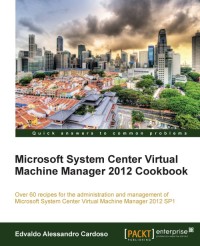
System Center Virtual Machine Manager 2012 Cookbook


 Cloudtidings.com