
Archive
Teched Australia 2010. What happens here
Requirements for the VMMSSP Dashboard
The VMMSSP Dashboard integrates with an already functioning deployment of the self-service portal and has no additional infrastructure requirements.
It is assumed that the self-service portal and the VMMSSP database are configured in accordance with Microsoft installation guidance.
The following table lists the software requirements for the VMMSSP Dashboard.
VMMSSP Dashboard Software Requirements
|
Infrastructure |
Resource |
|
|
|
|
Software |
· Virtual Machine Manager Self-Service Portal · Windows SharePoint Services 3.0 SP2 Note Microsoft Office SharePoint Server 2007 SP2 is supported as an alternative to Windows SharePoint Services 3.0. · Microsoft SQL Server® 2008 · Microsoft .NET Framework 3.5 |
|
Browser |
· Microsoft Internet Explorer® 7.0 /8.0 |
Click here to download the VMSSP 2.0
In order to install the VMMSSP Dashboard, a user needs to be a member of the following security groups:
· On the computer where you are installing the Dashboard: local Administrators group (in highly-secured environments, the user may need to be a member of the domain Administrators group).
· Group with administrative permissions to the VMMSSP database.
· Group with administrative permissions to the Windows SharePoint Services server farm.
How to use SHAREPOINT to show information about your virtualized environment
The VMMSSP Dashboard is designed to work with an existing self-service portal installation. The Dashboard queries the VMMSSP database and uses the resulting data set to present key infrastructure, resource, virtual machine, and charge-back metrics in a graphical format.
The VMMSSP Dashboard uses SharePoint Web Parts to manage and display data sets:
· Microsoft Dashboard Configuration Web Part. Use this Web Part to create and modify the SQL queries that produce the data sets and the other properties that govern how the Dashboard displays the data sets.
· Microsoft Dashboard Viewer Web Part. Use this Web Part to display the data sets. A Dashboard Viewer Web Part displays one data set at a time. The VMMSSP Dashboard can contain multiple copies of the Dashboard Viewer Web Part at once, each copy displaying a different data set. Be aware that as you add more copies of the Web Part to the site, and as you increase the amount of data displayed, the performance of the site may degrade.
The following figure shows how users can interact with the Web Parts to retrieve and display data.

Click here to download the VMSSP 2.0
Virtual Machine Manager Self-Service Portal 2.0 FREE DOWNLOAD
The self-service portal provides the following features that are exposed through a web-based user interface:
- Configuration and allocation of datacenter resources: Store management and configuration information related to compute, network and storage resources as assets in the VMMSSP database.
- Customization of virtual machine actions: Provide a simple web-based interface to extend the default virtual machine actions; for example, you can add scripts that interact with Storage Area Networks for rapid deployment of virtual machines.
- Business unit on-boarding: Standardized forms and a simple workflow for registering and approving or rejecting business units to enroll in the portal.
- Infrastructure request and change management: Standardized forms and human-driven workflow that results in reducing the time needed to provision infrastructures in your environment.
- Self-Service provisioning: Supports bulk creation of virtual machines on provisioned infrastructure through the web-based interface.Helps business units to manage their virtual machines based on delegated roles.
Hyper-V Security Guide : Solution accelerator
The Hyper-V Security Guide provides prescriptive guidance for hardening the Hyper-V role, including several best practices for installing and configuring Hyper-V with a focus on security. These best practices include measures for reducing the attack surface of Hyper-V as well as recommendations for properly configuring secure virtual networks and storage devices.
It also provides :
- Methods for delegating virtual machine management so that virtual machine administrators only have the minimum permissions they require. It describes common delegation scenarios, and includes detailed steps to guide you through using Authorization Manager (AzMan) and System Center Virtual Machine Manager 2008 (VMM 2008) to separate virtual machine administrators from virtualization host administrators.
- Prescriptive guidance for securing virtual machine resources. It includes best practices and detailed steps for protecting virtual machines by using a combination of file system permissions, encryption, and auditing.
Download of the Hyper-V Security Guide.
SCDPM 2010 : How to add support for Hyper-V Item Level Recorevey
You must have the Hyper-V role enabled on the DPM 2010 server to perform item-level recoveries. During item-level recovery, DPM has to mount the VHDs of the protected virtual machines.
DPM 2010 supports item-level recovery (ILR), which allows you to do granular recovery of files, folders, volumes, and virtual hard disks (VHDs) from a host-level backup of Hyper-V virtual machines to a network share or a volume on a DPM protected server.

DPM 2010. PowerShell Script to auto protect VMs as they get added to a CSV Cluster
In any virtualized environment, adding new VMs is a frequent operation. While backup administrators can protect an entire Hyper-V host using the DPM Management Console, the protection group had to be modified manually to include the new virtual machines that have come up on the Hyper-V host.
There a PowerShell script, created by Angad Pal Singh (DPM Team). To Download Script : AddNewClusteredVM.ps1
The script for clustered servers (AddNewClusteredVM.ps1) takes as input the following two values in order:
This example takes the following values as input:
csv01.contoso.com – replace this with the name of your Hyper-V cluster
dpm-server01.contoso.com – replace this with the name of your DPM server
PS C:Program FilesMicrosoft DPMDPMbin> .AddNewCLusteredVM.ps1 csv01.contoso.com "Protection Group 2"

The script performs the following tasks:
1. Takes FQDN of protected cluster and name of protection group as input.
2. Searches for the protected cluster and the protection group.
3. Runs inquiry on the cluster to get the list of resource groups.
4. Runs parallel inquiry for each resource group and obtains the list of unprotected virtual machines under them.
5. Adds the unprotected virtual machines to the protection group.
6. Saves the changes to the protection group and exits.
Important:
· Shared disks that may be listed under the resource groups of your Hyper-V cluster are not Hyper-V data sources, and are not considered for automatic addition using this script.
· Any new virtual machines that are finally added to a protection group are scheduled for immediate replica creation, overriding any existing protection group behavior. You may modify the respective script to change this after referring the specific cmdlet help option.
Disk2vhd : new version
Disk2vhd is a utility that creates VHD (Virtual Hard Disk – Microsoft’s Virtual Machine disk format) versions of physical disks for use in Microsoft Virtual PC or Microsoft Hyper-V virtual machines (VMs). The difference between Disk2vhd and other physical-to-virtual tools is that you can run Disk2vhd on a system that’s online.
Command Line Usage
Disk2vhd includes command-line options that enable you to script the creation of VHDs. Specify the volumes you want included in a snapshot by drive letter (e.g. c:) or use "*" to include all volumes.
Usage: disk2vhd <[drive: [drive:]…]|[*]> <vhdfile>
Example: disk2vhd * c:vhdsnapshot.vhd
HowTo monitor the NIC used by a Virtual Machine in a Hyper-V cluster
The best approach is to use NIC Teaming. But in case your solution(Hyper-V Host Clusters) does not support don’t support NIC Teaming, then one approach to workaround this, is to add a cluster resource script to the Cluster Group.
Interested? Clique the link below to get the script, with short instructions.
Windows 7 and Windows Server 2008 R2 SP1 : New Features
The Windows 7 and Windows Server 2008 R2 SP1 Beta helps keep your PCs and servers on the latest support level, provides ongoing improvements to the Windows Operating System (OS), by including previous updates delivered over Windows Update as well as continuing incremental updates to the Windows 7 and Windows Server 2008 R2 platforms based on customer feedback, and is easy for organizations to deploy a single set of updates.
The public beta is best suited for IT pros, tech enthusiasts and developers who need to test the service pack in their organization or with the software they are developing.
In order to download and install the Windows 7 and Windows Server 2008 R2 SP1 Beta you must currently have a Release to Manufacturing (RTM) version of Windows 7 and Windows Server 2008 R2 already installed. The Beta is available in English, French, German, Japanese and Spanish.
To learn more about piloting, deploying and managing Windows 7, visit the Springboard Series on TechNet.
Recommended Books


System Center 2012 R2 Virtual Machine
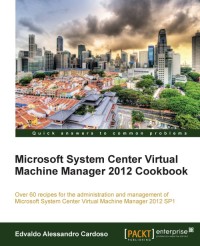
System Center Virtual Machine Manager 2012 Cookbook


 Cloudtidings.com